
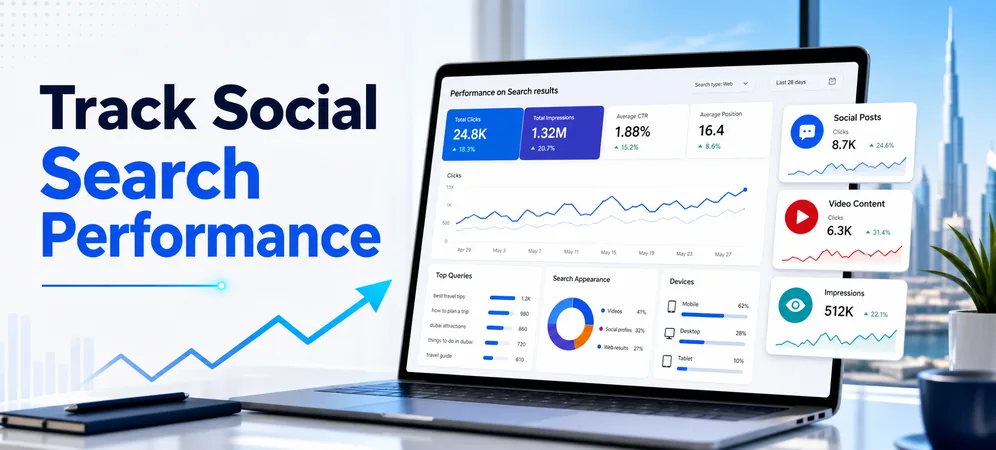
Google Search Console platform properties give marketers a new way to understand how social and video content performs in Google Search. For brands that publish across Instagram, TikTok, X, and YouTube, this closes an important reporting gap: your website is no longer the only place where people may discover your content through Google.
Google announced that platform properties became globally available in July 2026, alongside guidance for analyzing social and video content performance. The practical opportunity is not to chase another dashboard. It is to use Search data to decide which posts deserve repackaging, which topics need website support, and where social content is already attracting search demand.
What platform properties change
A normal Search Console property shows how a website performs in Google Search. A platform property extends similar reporting to supported social and video accounts. Google says platform properties can show how content on Instagram, TikTok, X, and YouTube appears across Google Search, Discover, and Google News.
This matters because social content often ranks or appears in search features before a user visits a company website. A YouTube Short, Instagram post, or TikTok video can answer a query, shape brand perception, and influence the next click. If your reporting ignores that visibility, your SEO strategy is missing part of the discovery journey.
Use it to find search-led content ideas
The most useful starting point is query data. Look for the words people used before finding your social or video content. These queries reveal what your audience already associates with your brand, topics, formats, and locations.
For example, a Dubai clinic may find that a short educational video is attracting searches around treatment cost. A real-estate company may see country-specific queries around community names. A B2B agency may discover that one LinkedIn post is visible for a specific service problem. These patterns can become new captions, video titles, blog sections, landing-page copy, or FAQ updates.
| Search Console signal | What to check | Action to take |
|---|---|---|
| Top queries | Terms that bring users to videos or posts | Build follow-up posts, titles, captions, and website answers |
| Top content | Posts gaining Search clicks or impressions | Pin, update, repurpose, or support with a related page |
| Countries | Where Search visibility is coming from | Localize examples, offers, and posting priorities |
| Devices | Mobile and desktop discovery patterns | Adjust format, thumbnail, intro, and landing experience |
Connect social search data to website SEO
Platform properties should not sit apart from website reporting. Review the queries and posts beside your website Search Console data. If a social post performs well for a question your website does not answer, that is a content gap. If a website page already ranks for the same intent, the social post can reinforce the topic instead of competing with it.
This is especially useful for brands running both social media marketing and SEO. A high-performing video can become a blog outline. A blog that receives traffic for a “how to” query can become a short video. A service page can gain stronger supporting content when social comments and Search queries reveal the same customer objection.
The key is intent. Do not turn every successful post into a service page. Some queries need quick education, some need a comparison, and some need a conversion path. Match the format to the user’s next step.
Compare formats and platforms carefully
Google’s official guide suggests comparing content formats such as YouTube Shorts and full-length videos by using URL patterns. This helps you see whether short-form content is driving discovery, whether longer tutorials attract more qualified searches, or whether one platform is reaching a different country or device mix.
For a Dubai business, these comparisons can prevent overgeneral decisions. A YouTube tutorial may attract search traffic from outside the UAE, while an Instagram post may bring more local profile visits. Both can be useful, but they should not be judged by the same single metric. Your monthly reporting should separate platform, format, query, and outcome.
If paid promotion is involved, keep it separate from organic platform-property data. Paid reach can be useful, but it should not be used to explain organic Search visibility. A balanced digital marketing agency in Dubai should show how the channels support each other without blending the evidence.
Use 24-hour data without overreacting
One useful feature in Google’s guidance is the 24-hour view. This can identify a post or video that suddenly receives search interest. When that happens, act quickly but still check relevance. A spike may justify reposting, adding an Instagram story, updating a caption, creating a follow-up video, or linking users to a stronger website resource.
Do not rebuild the whole content calendar from one short spike. First check whether the query matches your audience, service area, and commercial priorities. If the trend is useful, document the change and review the result later. If it is off-topic, learn from it but avoid chasing traffic that cannot support the business.
Build a weekly review workflow
A simple workflow keeps platform properties practical. Review top queries, top posts, countries, devices, and recent changes once a week. Mark each insight as one of four actions: update the post, create related content, support with a website page, or ignore because it is not commercially relevant.
Then connect the action to ownership. The social team may update captions and thumbnails. The SEO team may build a supporting guide or improve a service page. The paid team may test a related message in search engine marketing campaigns. The business owner may confirm whether the topic attracts the right leads.
This review does not need to be complex. It needs to be consistent. Without a review rhythm, useful Search data becomes another exported file that nobody uses.
What to do next
Start by adding eligible platform properties in Search Console and confirming which accounts are available. Then compare the data with your website Search Console property, existing blog coverage, and key service pages. Look for search queries that deserve stronger answers, not just posts with high impressions.
If the same audience question appears across Search Console, comments, sales calls, and paid-search terms, prioritize it. That topic is probably not just a social idea; it may deserve a stronger page, guide, video sequence, or conversion path. For help turning search and social signals into a joined plan, contact SEO Shout.
Sources: Google Search Central’s announcement that platform properties rolled out globally and Google’s guide to analyzing social and video platform content in Search Console.