
LinkedIn video ads are no longer just a brand-awareness format for B2B marketers. Used well, they can explain complex services, warm high-value audiences, and show which professional segments are moving closer to enquiry or purchase. Used loosely, they can also become an expensive view-count exercise.
The difference is measurement. LinkedIn says video ads can help brands build trust, reach professional audiences, and measure results such as views, completion rates, leads, and demographic engagement. For marketers in Dubai and the UAE, the practical question is how to turn those signals into better creative, targeting, and follow-up.
Start with the campaign objective
Before discussing video length or production style, choose the job of the campaign. Is the video meant to introduce a new service, educate decision-makers, promote a webinar, generate leads, or support sales conversations? A video built for awareness should not be judged only by cost per lead. A lead-generation video should not be celebrated only because it reached a large audience.
LinkedIn’s own video ads guidance frames setup around three steps: choose an objective, select an audience, and measure results. That order matters. Objective first, audience second, creative third, measurement throughout. This same discipline should also sit inside a broader digital marketing strategy in Dubai, so the video campaign supports search, content, and sales goals instead of standing alone.
Define the audience before producing the video
B2B video succeeds when the message is specific enough for the viewer to recognize their own problem. LinkedIn offers professional targeting signals such as role, industry, seniority, skills, and company attributes. That does not mean every campaign should become narrow and tiny, but it does mean the video should be written for a real decision-maker or influencer.
A CFO, marketing manager, founder, HR director, and procurement lead may all care about the same service for different reasons. The opening seconds should match the audience’s concern. For example, a finance audience may need risk and return, while an operations audience may need process and reliability. When targeting and script are misaligned, the report will often show weak completion and poor click quality.
Measure more than views
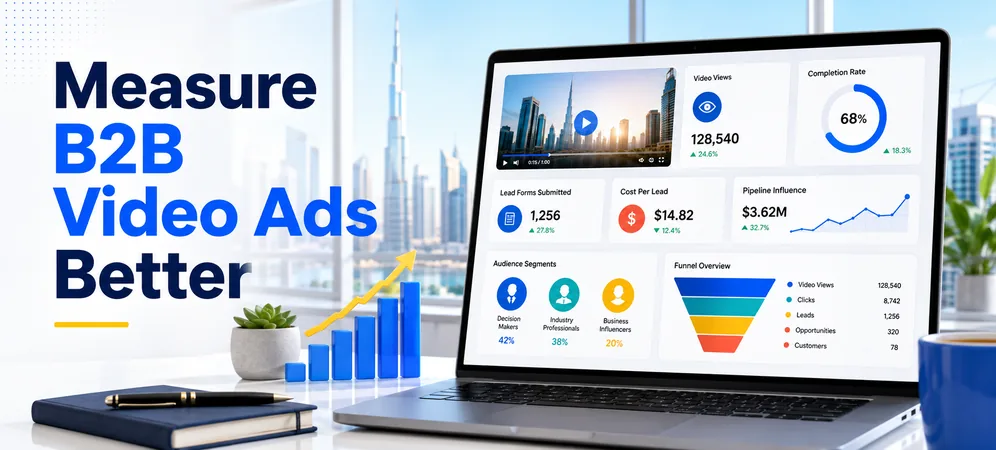
Views are useful, but they are not the finish line. Review how many people started the video, how far they watched, whether they clicked, whether they submitted a lead form, and whether those leads moved further through the pipeline. LinkedIn also highlights professional demographic data, which can help marketers see the industries, companies, and roles engaging with a campaign.
| Metric layer | What to review | Decision it supports |
|---|---|---|
| Attention | Views, view rate, completion rate, watch time | Is the hook and creative strong enough? |
| Audience fit | Job function, seniority, industry, company size | Are the right professionals engaging? |
| Action | Clicks, lead forms, landing-page visits, CTA use | Does interest turn into a useful next step? |
| Value | Qualified leads, pipeline, cost per opportunity | Is the campaign commercially worthwhile? |
A practical monthly report should explain why metrics changed. Did completion improve because the first five seconds became clearer? Did leads increase because the offer improved? Did cost rise because the audience became more senior? These questions turn reporting into learning.
Match the creative to the buying stage
Not every video needs to sell immediately. Early-stage videos can introduce a problem, explain a trend, or show a point of view. Middle-stage videos can compare approaches, answer objections, or show a use case. Bottom-stage videos can invite viewers to a demo, audit, consultation, or downloadable resource.
LinkedIn’s video ad specs allow different ratios, including vertical, landscape, and square formats, with video durations from a few seconds to much longer videos. The better question is not “how long can it be?” It is “how much time does this audience need to understand the point?” Short videos often work well for one sharp idea. Longer videos need stronger structure and a clear reason to keep watching.
For UAE campaigns, local relevance also matters. Use examples, market references, and offers that feel specific to the audience. A generic global explainer may generate views but still fail to create qualified enquiries. If the campaign drives users to the website, make sure the landing page continues the same promise through a relevant social media marketing or service page.
Build a retargeting and search follow-up plan
Video is often strongest when it warms an audience for the next step. Viewers who watched a useful percentage of a video may be ready for a case study, comparison guide, webinar invitation, or lead form. People who clicked but did not convert may need a clearer landing page or a stronger offer.
Connect LinkedIn learning with search engine marketing. If a video message performs well with a professional audience, test related language in paid search. If paid-search queries reveal common concerns, turn those concerns into new video hooks. The same loop can support SEO content by showing which topics deserve deeper articles and service-page FAQs.
Make reporting useful for sales
A B2B video report should be useful to the sales team, not only the marketing team. Include the campaign objective, audience definition, creative angle, spend, engagement, leads, and lead quality. Add short notes on which industries or seniorities responded best and which objections appeared in comments, calls, or sales feedback.
When possible, compare campaign leads with sales outcomes. A low cost per lead is not impressive if the leads are junior, irrelevant, or outside the target market. A smaller set of senior decision-makers may be more valuable even when media costs look higher. This is why performance should be reviewed with both platform data and business feedback.
Keep improving one variable at a time
Video campaigns become hard to interpret when everything changes at once. Test one major variable at a time: hook, audience, offer, CTA, format, or landing page. Keep a simple change log so the team can connect results to decisions.
Start with two or three creative angles. For example, one video may focus on a business pain, one may explain a method, and one may invite the viewer to a practical resource. After the first cycle, keep the strongest learning and replace the weakest element. If you want help building that full-funnel measurement plan, contact SEO Shout.
Sources: LinkedIn’s official pages on Video Ads and Video Ads specs.